How Aqua Insights measures
Aqua Insights starts with a physical sensor installed directly in the water network. It measures tryptophan-like fluorescence, an optical signature associated with organic matter and microbial activity, continuously and in real time. The measurement is reagentless and produces no chemical waste: light goes in, a fluorescence signature comes back, dozens of times a second, with nothing consumed and nothing to restock.
Because the sensor never stops measuring, it can catch a change in water quality the moment it happens rather than at the next scheduled sample, which for conventional lab-based testing can be hours to days later. That gap between something changing in the network and someone finding out is what Aqua Insights is built to close.
A sensor reading on its own doesn't confirm what's happening, so when the signal moves outside a site's established baseline, an event-triggered autosampler activates automatically and captures a physical sample at that moment. That sample can go to an accredited laboratory for confirmation, giving operators a way to verify what the continuous signal is showing without relying on manual grab-sampling schedules that, by design, miss most events entirely.
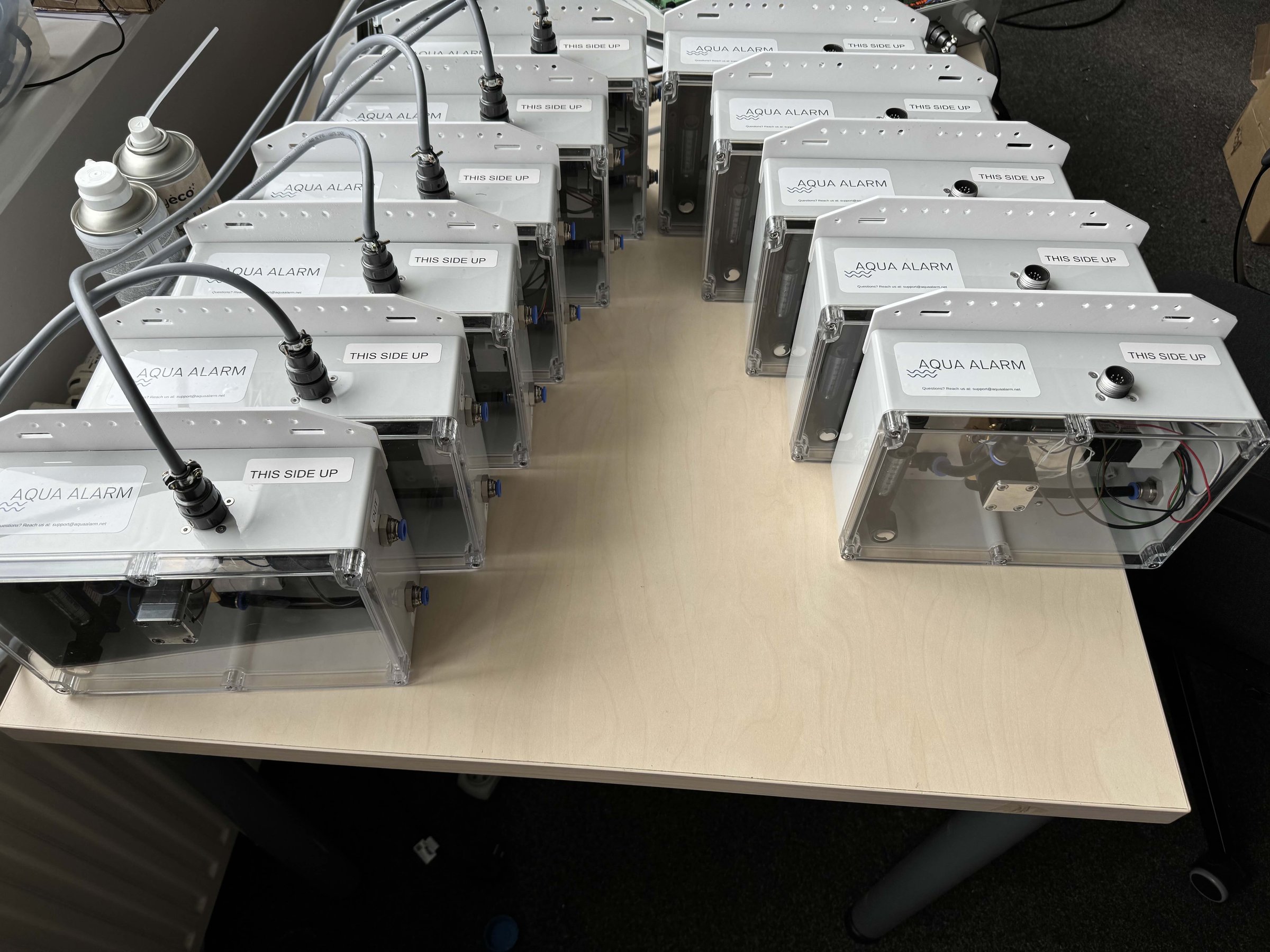
Every sensor and autosampler is assembled and tested by hand in Poland before it goes into the field, wired, calibrated, and checked unit by unit before shipping. Small-batch production means every unit gets individual attention rather than running through an automated line, and problems get caught on the bench rather than after deployment.

Finished units are tested, packed, and shipped ready to install.
The autosampler
A continuous sensor tells you something changed. It doesn't hand you proof. When the TLF signal moves outside a site's baseline, the autosampler activates on its own and draws a physical water sample at that exact moment, no one has to notice the alert and remember to go collect one.
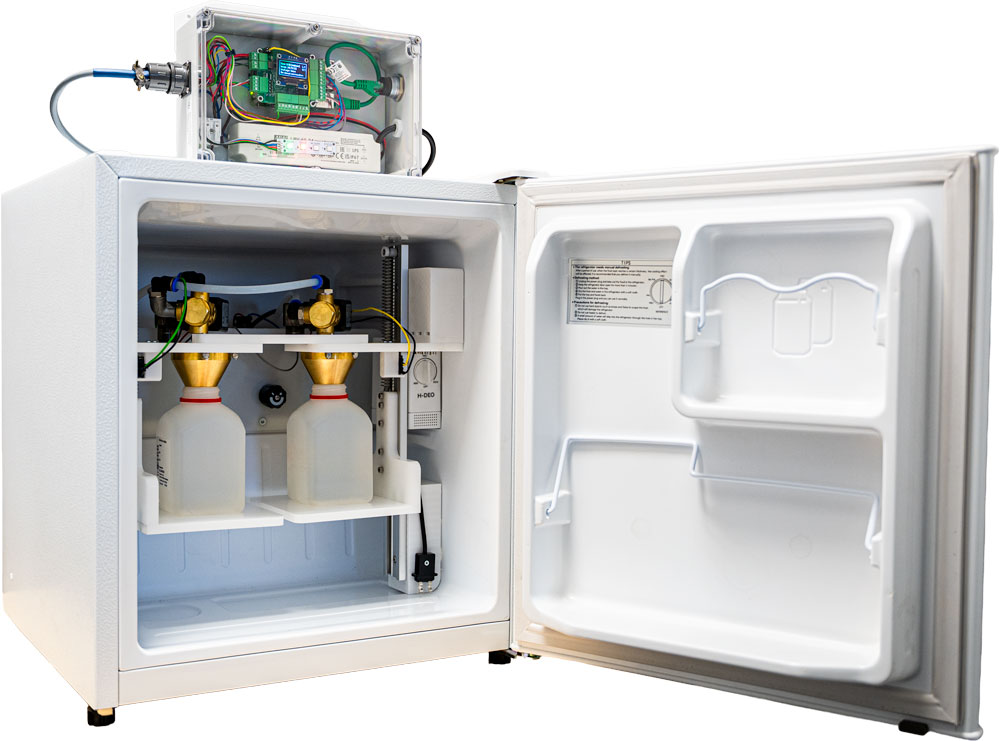
That sample is what turns a sensor reading into something a lab can confirm. It gets picked up and tested through standard accredited channels, on the same footing as any manually drawn sample, except it was taken at the moment the network actually showed a change instead of on a calendar schedule that has no relationship to when contamination events happen. Most water-quality events are missed entirely by routine grab-sampling simply because the timing doesn't line up. Event-triggered sampling closes that gap directly.
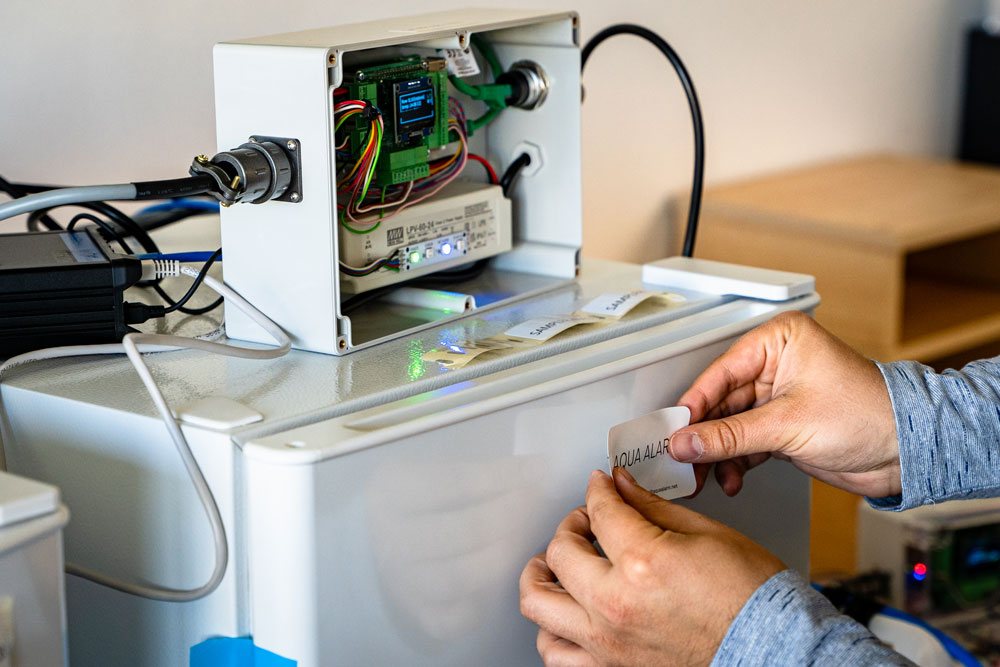
Like the sensor, the autosampler runs unattended in the field: refrigerated storage to preserve the sample until pickup, no manual intervention required to capture it.
A sensor reading is already a signal worth having: it shows that something on the network has changed, even before the cause is clear. Read against what's happening on the network at that moment, water age, disinfectant residual, seasonal conditions, planned maintenance, that same signal becomes easier to interpret and more directly useful to an operator. Aqua Insights delivers that continuous signal today. Turning it into a fuller diagnostic picture, understanding not just that something changed but why, is the direction we're building toward next.
The tryptophan-like fluorescence signal Aqua Insights measures has been studied in peer-reviewed research for over a decade. Read the science →